
EDUCATION, TRAINING

Educational infrastructure.
BEE INVEST INTERNATIONAL is involved in all training engineering for the implementation of cycles and training programs:
Support for primary and secondary schools.
Teacher training and motivation.
Revitalization of technical and university higher education.
Modernization and Equipment of training centers and students.
Motivation of teachers.
Professional training: Agricultural and fisheries training, Health training, Technician, managerial, sales, export training …


- Published in Products
FUNDING

Financing of projects by Sovereign Guarantee.
BEE INVEST work with the largest international banks and brings together financial partners specializing in state financing solutions for the sustainable economic and social development of the country.
Many countries have rich subsoils and economies at whatever stage of development.
We are looking for an impact for the country in terms of growth, stability and job creation: once again we are talking about the macro economy. BEE INVEST considers that the best way to proceed is to accompany you without any constraint in the process of emergence of your country.
The agreements established aim on the one hand at sustainable development and on the other hand a solid economic profitability based on the creation of wealth which can be valued nationally and internationally.

- Published in Products
VASELINE-GELATIN

Vaseline
Vaseline is a brand of petroleum jelly. Products include plain petroleum jelly and a selection of skin creams, soaps, lotions, cleansers, deodorants and personal lubricants.
Gelatin
is a translucent, colorless, brittle (when dry), flavorless solid substance, derived from the collagen inside animals’ skin and bones. It is commonly used as a gelling agent in food, pharmaceuticals, photography, and cosmetic manufacturing. Substances containing gelatin or functioning in a similar way are called gelatinous. Gelatin is an irreversibly hydrolyses form of collagen, and is classified as a foodstuff. It is found in some gummy candies as well as other products such as marshmallows, gelatin dessert, and some low-fat yogurt. Household gelatin comes in the form of sheets, granules, or powder. Instant types can be added to the food as they are; others need to be soaked in water beforehand.


- Published in Products
SULPHUR

Is the chemical element with atomic number 16, represented by the symbol S. It is an abundant, multivalentnon-metal. At normal conditions, sulfur atoms form cyclic octatomic molecules with chemical formula S8. Elemental sulfur is a bright yellow crystalline solid. Chemically, sulfur can react as either an oxidant or reducing agent. It oxidizes most metals and several nonmetals, including carbon, which leads to its negatives charge in most organosulfur compounds, but it reduces several strong oxidants, such as oxygen and fluorine.


- Published in Products
RPO (Rubber Process Oil)

Rubbers, both synthetic and natural are commercially used to produce products from rubber bands to a toy to the giant tyres for various vehicles including aircrafts.
Rubber Process Oils are used at during mixing of rubber compounds. These help in improving the dispersion of fillers and flow characteristics of the compound during further processing. IPOL Rubber process oils are specially developed taking into consideration the type of rubber and the end product applications.
The range of IPOL Rubber Process Oils is broadly divided in following three categories.
Aromatic types : The primary characteristics of aromatic hydrocarbons are the presence of the double bonded mix ring carbon structure. Aromatic extracts procured from selected refineries and suitably blended to meet stringent specifications, are used for compounding batches to manufacture Tyres, calendared and molded sheets, Tread rubber etc.
Naphthenic types : Naphthenic are a class of hydrocarbons also referred to as ‘cycloparaffins’. Though their structure is similar to the aromatic ring, these are single bonded thus having a stable structure. Several such hydrocarbon rings may be linked indicating a variety of available grades. Their unique colour stability, solubility and good thermal stability makes them ideal for molded articles, slippers, LPG tubes, floor tiles, etc.
Paraffinic types : This class of hydrocarbons constitutes branched chain or straight linked hydrocarbon molecules of various viscosities. As the chain length increases, the viscosity increases and the rubber process oil becomes more viscous. They find extensive usage in EPDM, Butyl rubbers. IPOL grades include Paraffinic oils with high viscosity and high flash point for better shelf life of the end product. The high viscosity and high flash point IPOL paraffinic oils are extensively used in EPDM profiles for automotive applications.
In addition to these three types IPOL has a range of non carcinogenic low PCA ( Polycyclic aromatics ) oils meeting EU regulation. The range includes Mild extracted solvate (MES) type and Residual Aromatic Extract (RAE) type of oils. MES are blend of special heavy paraffinic oils while RAE are aromatic extracts. Both the types have Polycyclic aromatics content (as tested by IP 346 ) of less than 3% as required by EU regulation.

- Published in Products
PARAFFIN

- A flammable, whitish, translucent, waxy solid consisting of a mixture of saturated hydrocarbons, obtained by distillation from petroleum or shale and used in candles, cosmetics, polishes, and sealing and waterproofing compounds
- A colorless, flammable, oily liquid similarly obtained and used as fuel, esp. kerosene
TYPES OF PARAFFIN:
Paraffin white Oil Medical
Wax Paraffin


- Published in Products
NAPHTHA

Naphtha is a feedstock destined either for the petrochemical industry (e.g. ethylene manufacture or aromatics production) or for gasoline production by reforming or isomerisation within the refinery. Naphtha comprises material that distils between 30°C and 210°C.
IRAN Naphtha-Heavy Naphtha
IRAN Naphtha-Light Naphtha
IRAQ ORIGIN
RUSSIAN


- Published in Products
MAZUT
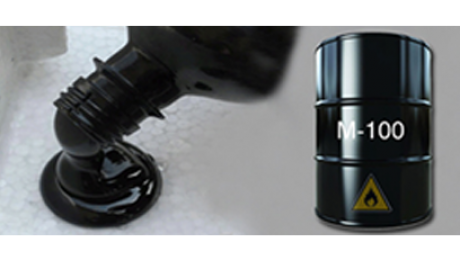
MAZUT
Fuel oil defines oils that make up the distillation residue. It comprises all residual fuel oils, including those obtained by blending. Its kinematic viscosity is above 10 cSt at 80°C. The flash point is always above 50°C and the density is always higher than 0.90 kg/l.
Types of Fuel oil:
• High Sulphur Fuel Oil , HSFO
• Low Sulphur Fuel Oil , LSFO
Mazut is a heavy, low quality fuel oil.Mazut is the residue from distillation of gasoline, ligroin, kerosine, and diesel oil fractions from petroleum. Mazut may be used as boiler fuel oil, in the preparation of distillate and residual lubricating oils, in cracking or hydrogenation processes for the manufacture of motor fuel (gasoline or diesel oil), and in the production of bitumen and coke, depending on its chemical composition and properties.
Types of Mazut:
CST 180
CST 280
CST 380
M100


- Published in Products
LUBE OIL

Lube oil is designed to perform Lubrication of moving parts, cooling, cleaning, corrosion control, and etc.
A major use of ethyleneamines is in the manufacturing of lubricant and fuel additives. Ashless dispersants are used in engine oils to reduce sludge and varnish deposits caused by the low-speed operation of motor vehicles.
Fuel additives that control deposits in the fuel system (fuel injectors, intake valves, combustion chamber) of motor vehicles are produced from ethyleneamines.
TYPES OF LUBE OIL:
Heavy Lube Oil
Light Lube Oil

- Published in Products
LPG GOST 55 42-87

Liquefied Petroleum Gas
LPG
Liquefied petroleum gases are the light hydrocarbon fraction of the paraffin series, derived from refinery processes, crude oil stabilisation plants and natural gas processing plants comprising propane (C3H8) and butane (C4H10) or a combination of the two.
They could also include propylene, butylene, isobutene and isobutylene. LPG are normally liquefied under pressure for transportation and storage.


- Published in Products